Salesforce campaign settings control who can access campaigns and how campaign data is structured in your org. Proper configuration ensures Marketing Users can effectively create, edit, and manage campaigns while maintaining data integrity and security. This guide covers the essential campaign settings configuration steps for Salesforce admins.
Understanding Salesforce Campaign Management Prerequisites
Before configuring campaign settings, ensure users have the proper licensing and permissions. Marketing User license is required for users who need to create, edit, delete campaigns, or access advanced campaigning features. Without this license, users cannot perform campaign management tasks beyond basic viewing permissions.
Campaign settings configuration affects both the Campaign object and Campaign Member object. These settings determine field availability, data validation rules, and user access patterns across your Salesforce org.
Accessing Campaign Settings in Salesforce
Navigate to campaign settings through Setup. The configuration interface provides access to field management, validation rules, and object-level security settings.
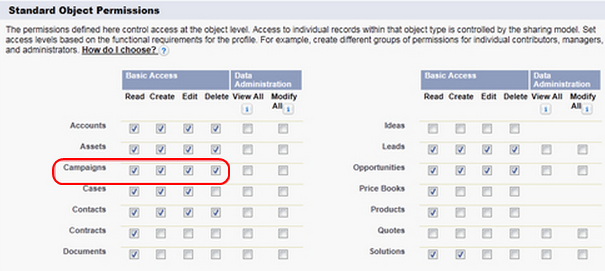
Navigation Path: Setup → Customize → Campaigns → Settings
From this interface, you can configure campaign-specific settings including default field values, validation rules, and integration parameters. These settings apply org-wide and affect all campaign records.
Standard Campaign Object Fields
The Campaign object includes standard fields that support most campaign management use cases. Understanding these field types helps when planning custom field additions or data import strategies.
| Field Name | Field Type | Purpose |
| Campaign Name | Text | Primary campaign identifier |
| Type | Picklist | Campaign category (Email, Webinar, etc.) |
| Status | Picklist | Campaign lifecycle stage |
| Start Date | Date | Campaign launch date |
| End Date | Date | Campaign completion date |
| Expected Revenue | Currency | Projected revenue from campaign |
| Budgeted Cost | Currency | Planned campaign expenses |
| Actual Cost | Currency | Real campaign expenses |
| Expected Response | Percentage | Anticipated response rate |
| Num Sent | Number | Total campaign communications sent |
| Active | Checkbox | Campaign active status |
| Description | Long Text Area | Campaign details and notes |
| Total Leads | Number | Lead count (system calculated) |
| Total Contacts | Number | Contact count (system calculated) |
| Converted Leads | Number | Leads converted to opportunities |
| Total Responses | Number | Campaign member responses |
| Total Value Opportunities | Currency | Sum of related opportunity amounts |
| Total Value Won Opportunities | Currency | Sum of closed-won opportunity amounts |
These standard fields support campaign ROI tracking, budget management, and performance reporting. Many fields auto-calculate based on related Campaign Member records and associated Opportunities.
Configuring Campaign Fields
Access campaign field configuration to add custom fields or modify existing field properties. Custom fields extend campaign functionality for specific business requirements.
Navigation Path: Setup → Customize → Campaigns → Fields
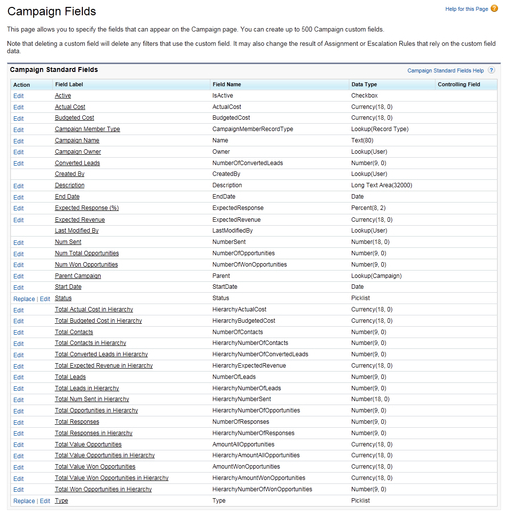
From this interface, you can:
- Create custom fields for campaign-specific data
- Modify picklist values for Type and Status fields
- Set field-level security and validation rules
- Configure field dependencies and default values
Campaign Member Object Configuration
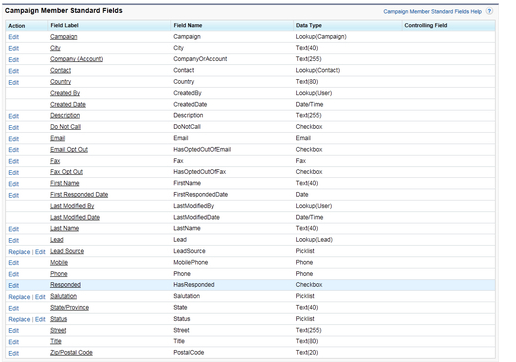
Campaign Members represent the relationship between Campaigns and Leads or Contacts. The Campaign Member object has its own field configuration requirements.
Standard Campaign Member Fields:
- Campaign: Lookup to parent Campaign record
- Contact: Lookup to Contact record (if member is a Contact)
- Lead: Lookup to Lead record (if member is a Lead)
- Status: Picklist indicating member engagement level
Campaign Member Status values are configurable per campaign type. Common status values include “Sent,” “Responded,” “Attended,” and “No Show.” These statuses drive campaign response tracking and ROI calculations.
Navigation Path: Setup → Customize → Campaigns → Campaign Members → Fields
Campaign Settings Best Practices
Effective campaign settings configuration requires planning around your organization’s marketing processes and reporting needs.
Marketing User License Management
Assign Marketing User licenses strategically. These licenses are typically more expensive than standard user licenses, so limit assignment to users who actively create and manage campaigns. Users without Marketing User licenses can still view campaigns if granted appropriate permissions.
Campaign Type and Status Standardization
Standardize Campaign Type picklist values across your organization. Common types include:
- Email Marketing
- Webinar
- Trade Show
- Direct Mail
- Social Media
- Content Marketing
Similarly, standardize Campaign Status values to reflect your campaign lifecycle: Planning, Active, Completed, Aborted.
Field-Level Security Configuration
Configure field-level security to protect sensitive campaign data like budget information. Marketing managers may need edit access to budget fields while campaign coordinators only need read access.
Integration Considerations
Campaign settings affect integration with marketing automation platforms, email marketing tools, and analytics systems. When configuring campaigns for integration:
- Ensure API user has appropriate campaign permissions
- Configure custom fields to store external system IDs
- Set up validation rules to maintain data quality during imports
- Consider governor limits for bulk campaign member operations
Frequently Asked Questions
What permissions are required for Salesforce campaign management?
Users need Marketing User license to create, edit, and delete campaigns. Standard users can view campaigns with appropriate sharing settings but cannot perform campaign management tasks. System administrators can configure campaign settings regardless of Marketing User license status.
How do I configure campaign member status values?
Campaign member status values are configured per campaign record, not globally. Edit a campaign record, scroll to the Advanced Campaign Setup section, and modify the Member Status picklist. You can mark specific status values as “Responded” to track campaign engagement for ROI calculations.
Can I create custom fields on the Campaign object?
Yes, you can create custom fields on both Campaign and Campaign Member objects. Navigate to Setup → Customize → Campaigns → Fields to add custom fields. Consider field-level security and validation rules when adding custom fields to maintain data integrity.
What is the difference between Campaign and Campaign Member objects?
The Campaign object stores campaign-level information like name, budget, dates, and description. The Campaign Member object creates the many-to-many relationship between campaigns and leads/contacts, storing individual member status and response information. One campaign can have many campaign members.
How do campaign settings affect reporting and analytics?
Campaign settings determine which fields are available for reports and dashboards. Standard fields like Expected Revenue and Actual Cost enable ROI reporting. Custom fields extend reporting capabilities for specific business requirements. Campaign Member status configuration affects response rate and engagement metrics.